-
Essential:
Essential cookies are essential for you to browse the website and use its features. Cookies that allow web shops to hold your items in your cart while you are shopping online and navigating the website are an example of strictly necessary cookies. Our website does not work without these cookies, so they are stored without your express consent.
-
Preferences cookies:
Preferences cookies can be used to change the user experience of our website. Preferences cookies allow a website to remember choices you have made in the past.
-
Statistics cookies:
Statistics cookies are used to collect information about how you use our website. None of this information can be used to identify you.
-
Marketing cookies:
Marketing cookies track your online activity. The purpose of marketing cookies is to help advertisers deliver more relevant advertising or to limit how many times you see an ad.
Our Ski Equipment Explained
The right gear can turn Arctic wilderness from a challenge into pure flow.
We use specialized equipment designed for remote, self-supported travel — reliable, efficient, and built to handle deep snow, long distances, and variable conditions. Whether you’ve skied before or not, here’s what makes our setup unique.
1. The skis — wide, stable, and built for the wild
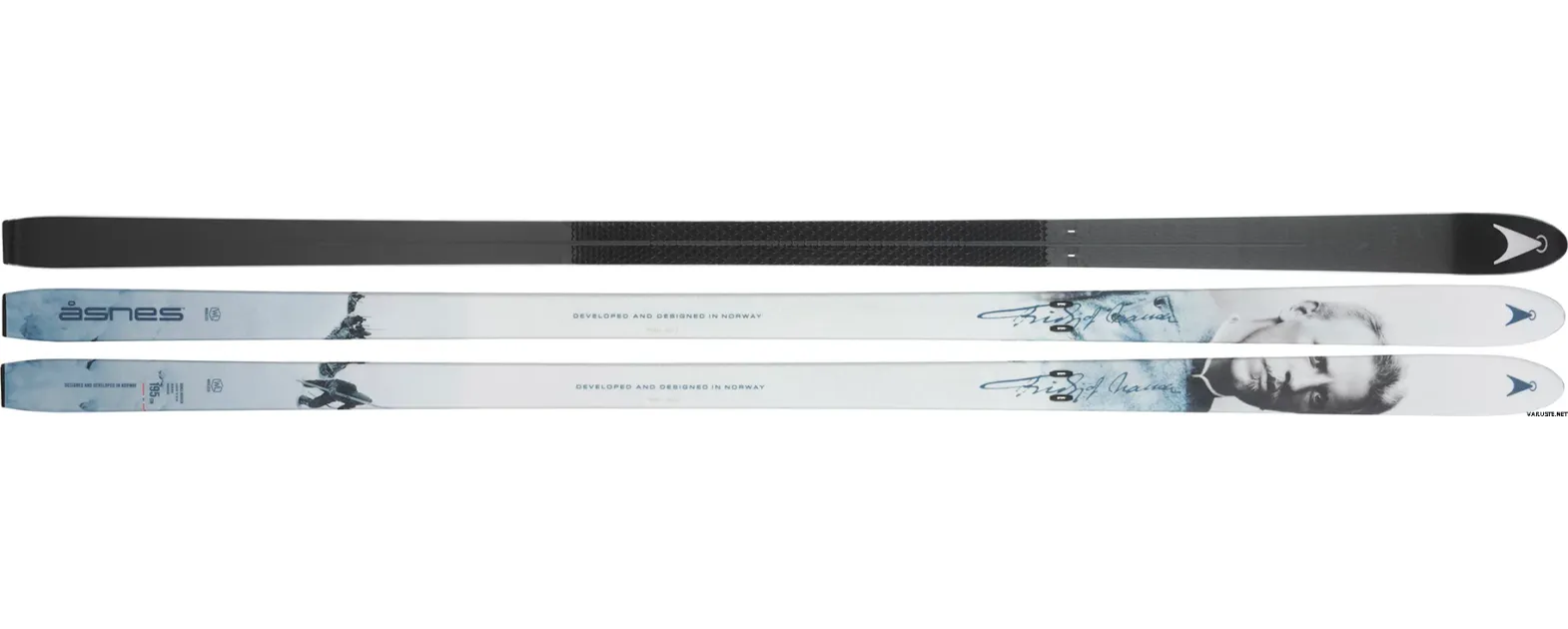
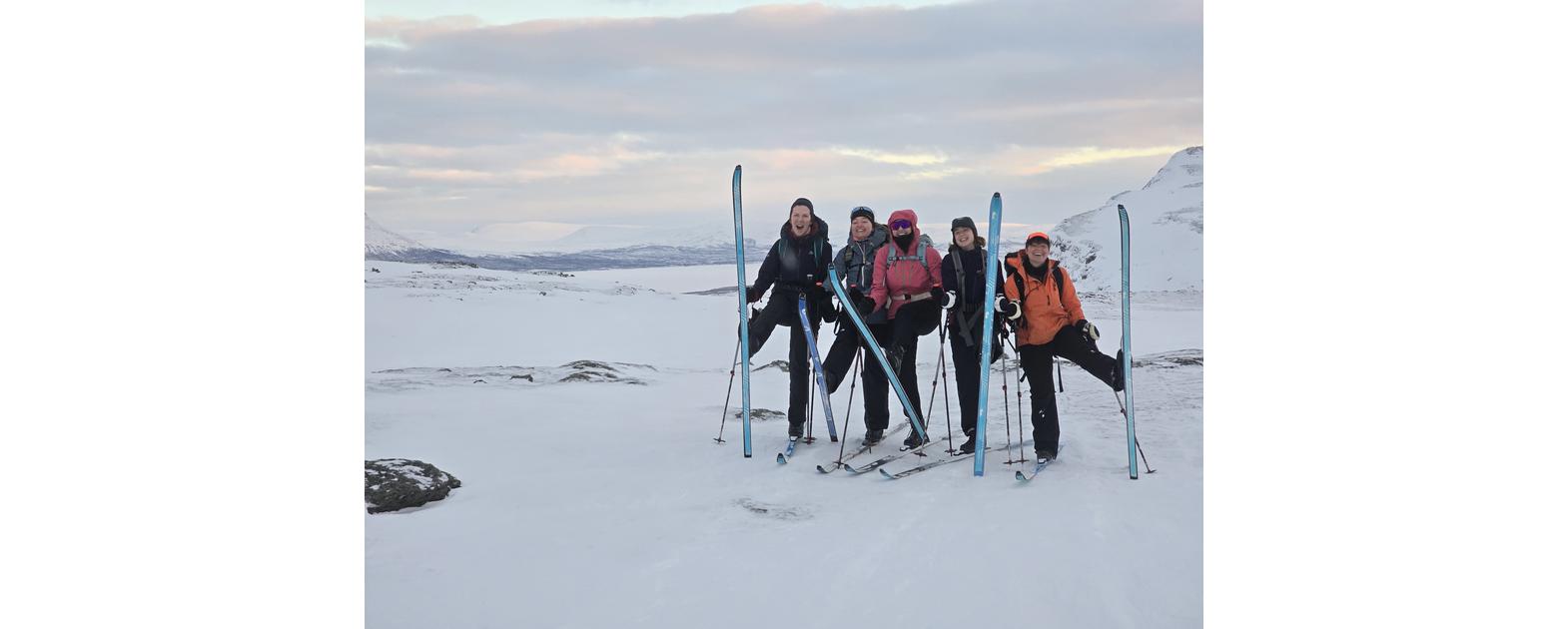
Our expeditions use sturdy backcountry skis, mainly from Åsnes and Fischer. They’re wider and more stable than classic cross-country skis, giving excellent floatation and control in deep snow.
Each ski pair has an integrated climbing skin under the base. Some skis use shorter “half skins” for better glide, others full-length skins for more grip — the setup depends on the skier’s role for the day. Since we often share sled-pulling duties in pairs, the person pulling the sled uses the full-length skins for easier traction, while their partner skis with lighter glide. The roles are switched regularly during the day.
Skins stay on for the whole tour; instead of changing skins, we simply change skis when the terrain or load changes. It’s simple, reliable, and efficient — no sticky glue or fiddly adjustments needed in subzero weather.
2. The bindings and boots — reliable comfort for long days
We use the NNN BC binding system, a proven standard for Arctic travel. It’s robust, easy to operate even with gloves, and works perfectly with insulated leather or synthetic boots.
The boots are warm and supportive but flexible enough for natural movement when pulling a sled or setting up camp. You can walk comfortably in them, which is essential when moving around tents or terrain where skis aren’t practical.
3. The sled (pulk) — teamwork in motion
Each pair of participants usually shares a sled — one pulls the pulk while the other skis with a backpack, and the roles are swapped regularly throughout the day. It keeps the effort balanced and makes teamwork part of the rhythm of travel.
The pulk glides easily behind you and quickly becomes part of your movement. When properly packed, you hardly notice the weight — just steady progress across the snow.
4. The poles — small details that matter
We use durable aluminum or composite poles with large baskets to prevent sinking in deep snow. Adjustable poles are often preferred, as you can shorten them on climbs and lengthen them on flat sections for better rhythm and efficiency.
5. One system — and everything fits
All expedition gear is standardized and compatible — from skis and bindings to tents and poles. Every tent uses the same pole lengths, and most spare parts fit across the entire set of equipment. This means fewer spares, simpler logistics, and faster field repairs if something ever breaks.
It’s a minimalist system built for efficiency: fewer variables, fewer problems, and more time to enjoy the journey.
Field note from Joose
Good gear should disappear — when everything works, you stop thinking about it. The skis glide, the pulk follows, and you just move, hour after hour, through the snow and light. That’s when you know the setup is right.