-
Essential:
Essential cookies are essential for you to browse the website and use its features. Cookies that allow web shops to hold your items in your cart while you are shopping online and navigating the website are an example of strictly necessary cookies. Our website does not work without these cookies, so they are stored without your express consent.
-
Preferences cookies:
Preferences cookies can be used to change the user experience of our website. Preferences cookies allow a website to remember choices you have made in the past.
-
Statistics cookies:
Statistics cookies are used to collect information about how you use our website. None of this information can be used to identify you.
-
Marketing cookies:
Marketing cookies track your online activity. The purpose of marketing cookies is to help advertisers deliver more relevant advertising or to limit how many times you see an ad.
What a Day on a Ski Expedition Looks Like
A glimpse into life above the Arctic Circle — where each day finds its rhythm in snow, light, and silence.
The Arctic day begins quietly. There’s a faint glow outside the tent, the sound of someone melting snow for morning coffee, and the soft crackle of the stove. The cold feels fresh and clean — a reminder that you’ve woken up somewhere far from the ordinary world.
Morning: Breaking camp and finding the rhythm
After breakfast, we pack our tents or tidy the hut, load the sleds, and start skiing. The first steps are slow and deliberate; skis glide through untouched snow as the group settles into a steady rhythm.
Morning light is at its most beautiful — a pale blue deepening into gold as the sun touches the horizon. There’s no rush; the aim is to move smoothly, conserving energy for the long Arctic day ahead.
Midday: Silence, snow and shared laughter
We usually stop for a short break around midday — not to cook, but to enjoy the hot lunch we’ve prepared in the morning and packed into thermoses. Each guest has their own numbered thermos, so there’s no mix-up, and everyone gets a warm meal even when the wind picks up.
Lunch breaks are rarely long; we eat, stretch, maybe take a few photos, and then continue gliding through the white silence. Conversation drifts easily, and laughter carries across the snow. The wilderness has a way of bringing calm focus — the noise of everyday life feels very far away.
Afternoon: Distance and discovery
As the day goes on, the terrain changes — gentle valleys, frozen lakes, open plateaus, sometimes long climbs that end in breathtaking views. We ski for several hours, each person moving at their own pace, connected by the same trail and purpose.
In the Arctic light, distances can be deceiving. A ridge that looks close may take an hour to reach, but when you arrive, it feels like a small victory shared among friends.
Evening: Camp life and simple luxury
By late afternoon we reach our next camp or hut. The work doesn’t end there — every place has its rhythm and its tasks. Someone starts melting snow for water, another keeps the fire going, and the floors must be swept regularly so the melting snow doesn’t turn the hut into a tropical sauna.
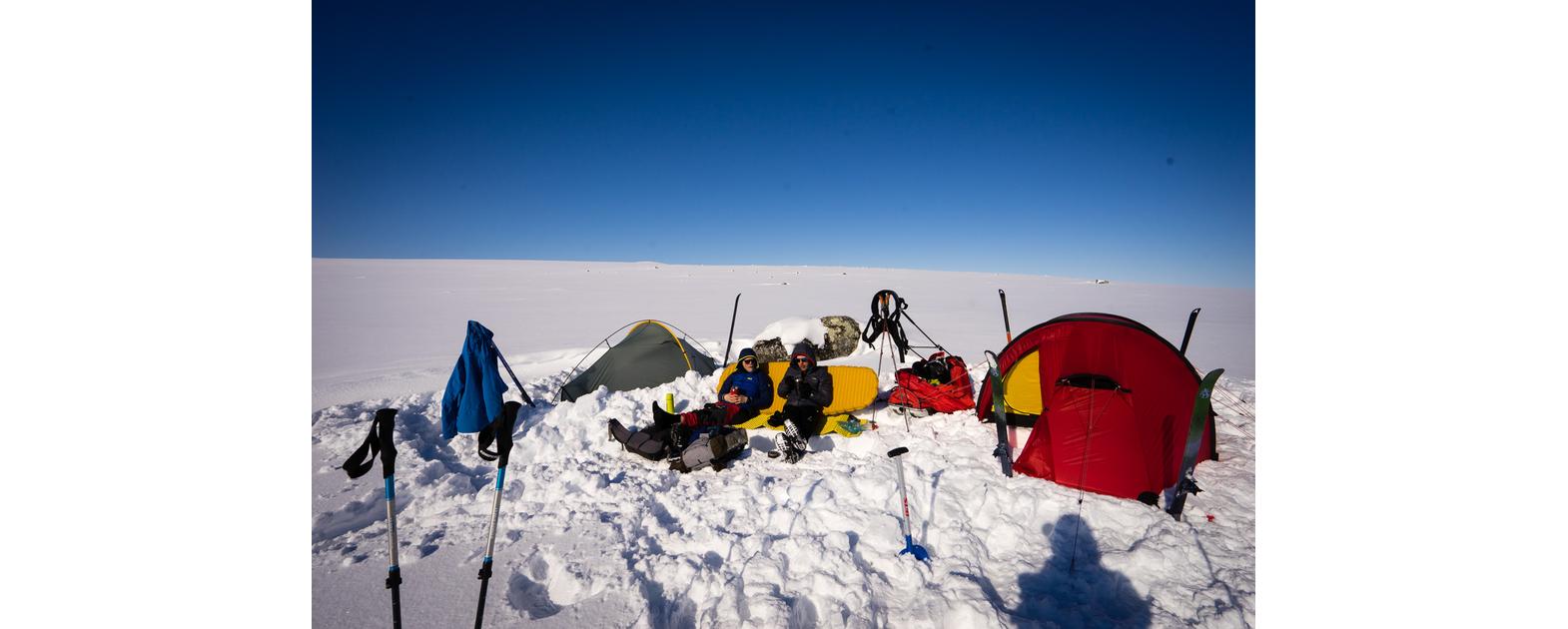
In tent camps, teamwork is everything. Each pair pitches their tent together, fixing anchors and tightening lines, but the final touches can be done while one person heads inside to organize gear and start melting snow. Soon the stove hums, the air smells of dinner, and warmth returns to hands and faces.
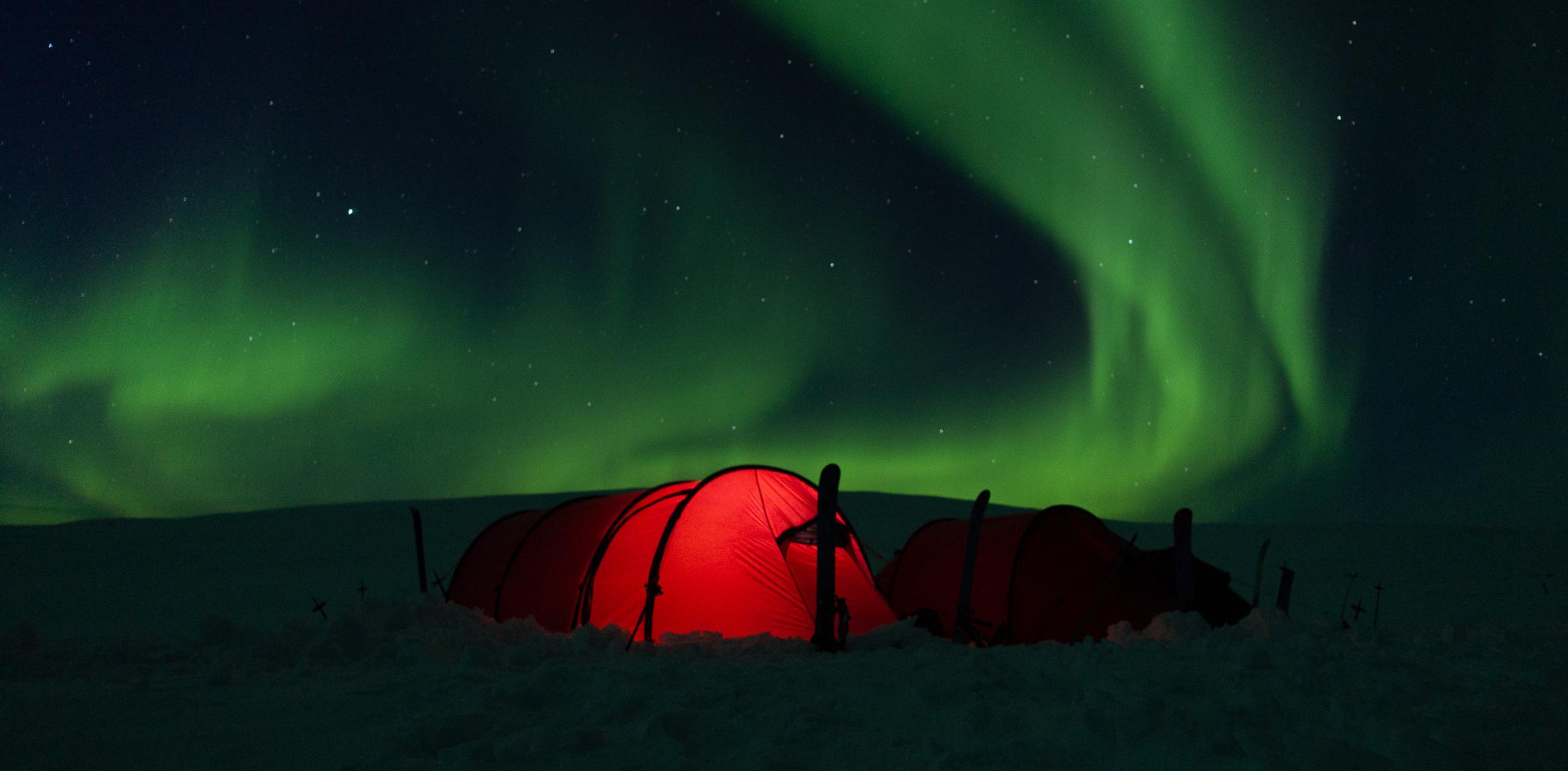
There’s time to relax, write a few notes in a journal, or step outside to watch the evening sky fade into deep blue — and sometimes, the green shimmer of the Northern Lights.
Warm, tired, and content, we crawl into sleeping bags as the Arctic silence settles again. Another day in the wilderness — simple, complete, and real.
Field note from Joose
Every camp has its rhythm — the sound of snow being melted, the soft brush of a broom on the floor, the quiet teamwork that happens without words. That’s when the wilderness stops feeling remote and starts feeling like home.
Curious for more? Read Bob from Nature Travels’ story from Halti for another look into life on the trail — and check our Q&A section to see how you can prepare for your own expedition.